The Mysterious Interstellar Visitor: The Story of ʻOumuamua
In 2017, astronomers discovered something extraordinary—an object passing through our solar system that didn’t belong here. It wasn’t just another asteroid or comet. It appeared to have come from another star system.
Meet ʻOumuamua—the first known interstellar object ever detected in our solar system.
🚀 Where Did It Come From?
ʻOumuamua did not originate near the Sun like most objects we study. Scientists believe it likely formed around a distant star, possibly billions of years ago.
At some point, it was probably ejected from its home system—perhaps due to a close encounter with a massive planet or a nearby star. After that, it drifted through interstellar space for an incredibly long period of time.
Think about that:
👉 This object may have been traveling through the galaxy long before Earth even developed complex life.
☀️ Entering Our Solar System
In 2017, ʻOumuamua entered our solar system at a very high speed—much faster than typical asteroids or comets that orbit the Sun.
- September 9, 2017: It passed closest to the Sun (perihelion), even closer than Mercury.
- As it approached, the Sun’s gravity slingshotted it, increasing its speed even more.
Unlike most objects we track, its path was hyperbolic—meaning it wasn’t orbiting the Sun. It was just passing through and is now on its way out, unlikely to ever return.
🔭 Discovery: A Cosmic Surprise
On October 19, 2017, astronomers using the Pan-STARRS1 telescope in Hawaii detected it.
Initially, it was classified as a comet, then reclassified as an asteroid, and then reconsidered again. That confusion alone hinted that something unusual was going on.
Soon after, scientists confirmed:
👉 This object came from outside our solar system.
That’s when it was named “ʻOumuamua,” a Hawaiian word meaning
“a messenger from afar arriving first.”
🧪 What Makes It So Strange?
Once telescopes around the world—including those operated by NASA—started observing it, things got interesting.
1. Its Shape 🤯
Based on how its brightness changed, scientists believe:
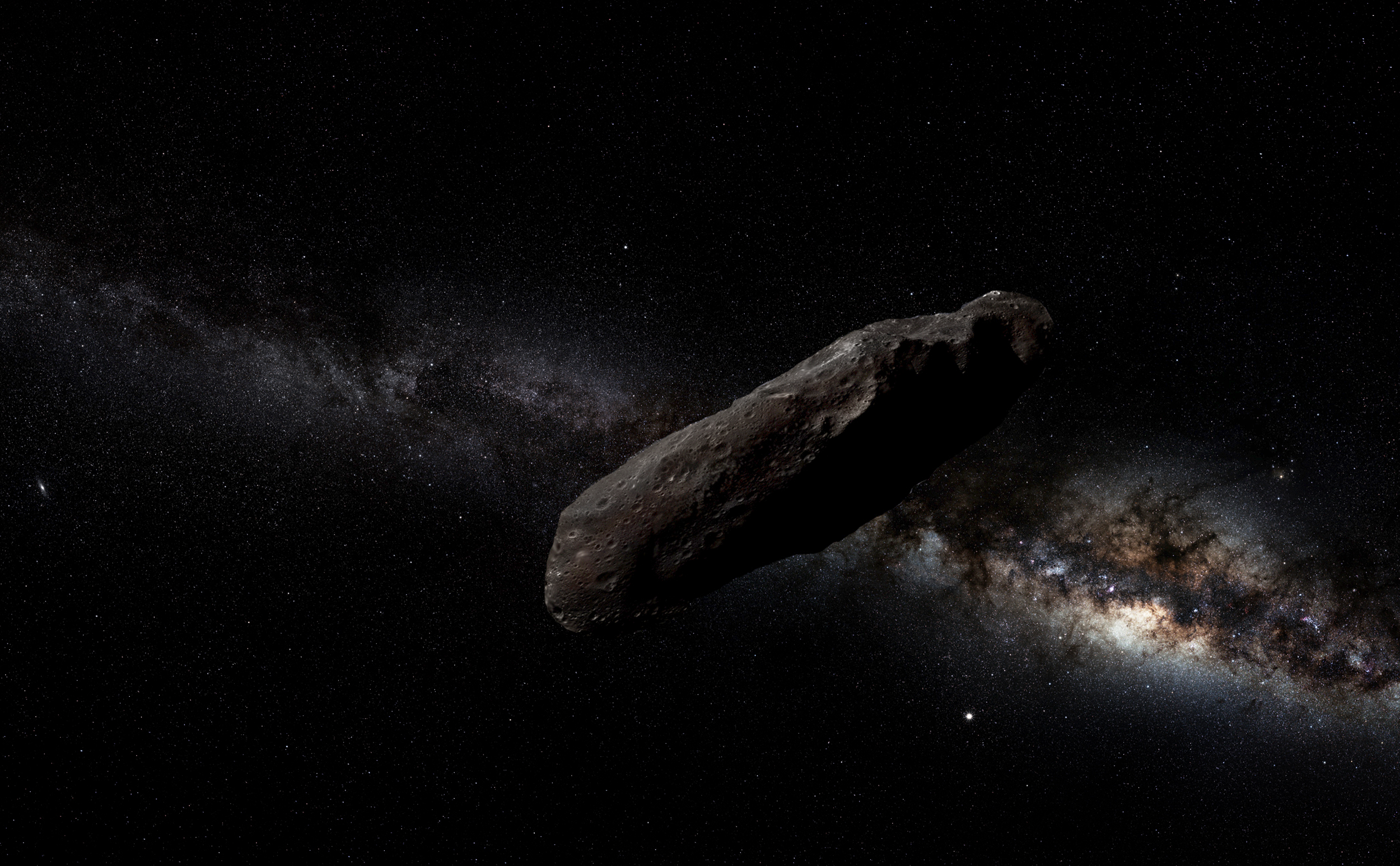
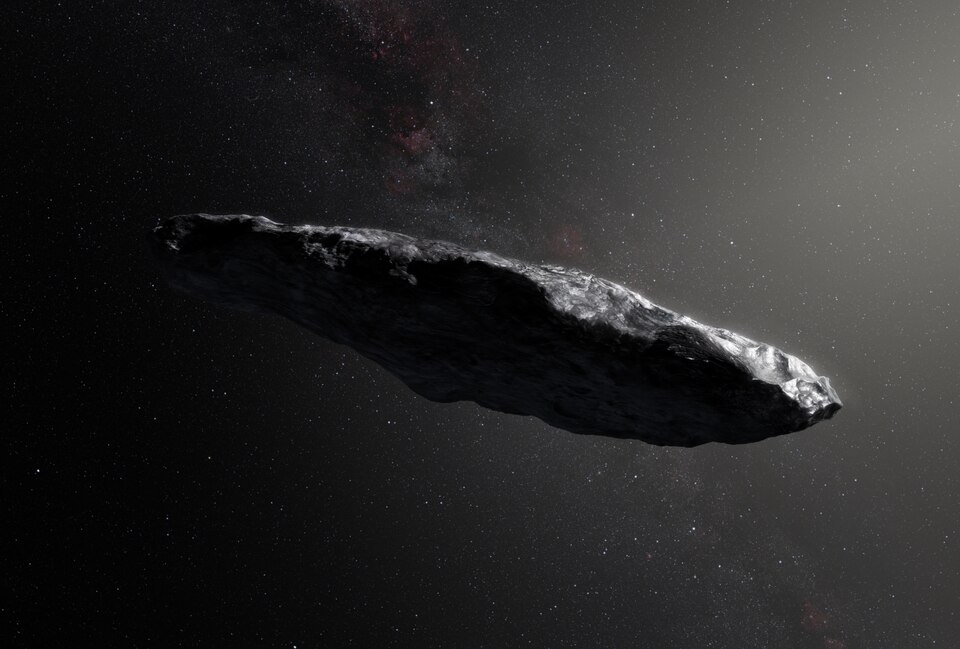
- It is extremely elongated
- Possibly up to 10 times longer than it is wide
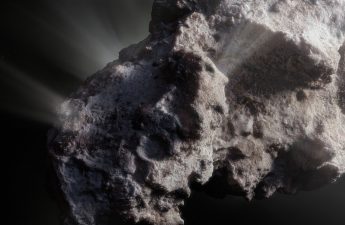
Some describe it as cigar-shaped, while others suggest it could be more like a flattened disk. Either way, it does not resemble typical asteroids we’ve seen before.
2. No Visible Tail… But Acting Like a Comet 💨
Comets usually release gas and dust when they get close to the Sun, forming a glowing tail.
ʻOumuamua, however:
- Shows no visible tail
- But still experiences a slight push (acceleration) away from the Sun
This has puzzled scientists and remains one of the biggest questions about the object.
3. The Acceleration Puzzle 🧩
Its motion cannot be explained by gravity alone.
One possible explanation is that:
- It may be releasing invisible gases (such as hydrogen)
- These gases could act like tiny thrusters, pushing it forward
This is somewhat similar to how a balloon moves when air rushes out—except on a cosmic scale.
🛸 The Alien Hypothesis (And Why It’s Controversial)
In 2018, Harvard astrophysicist Avi Loeb proposed a bold idea:
👉 What if ʻOumuamua isn’t natural?
He suggested it could be something like a light sail—a thin object pushed by radiation from stars, possibly artificial in origin.
This idea has sparked global debate.
However, many scientists remain cautious:
- There is no direct evidence of artificial technology
- Natural explanations, though unusual, are still plausible
For now, the mystery remains open.
👋 A Brief Visit… Then Gone
ʻOumuamua was visible only for a short time.
By the time it was discovered, it was already:
- Moving away from the Sun
- Getting dimmer and harder to observe
By late 2018, it has already passed beyond the outer planets and continues its journey back into interstellar space.
We may never see it again.
🌠 Why ʻOumuamua Matters
This is not just a one-time curiosity—it may represent an entirely new class of objects.
🔍 1. Proof Interstellar Objects Exist
Scientists have long suspected that objects can travel between star systems.
ʻOumuamua provides the first direct evidence.
🛰️ 2. A New Area of Research
Its discovery is already encouraging astronomers to improve sky surveys and detection systems, in hopes of identifying more such visitors in the future.
It’s possible that this is just the first of many interstellar objects we will observe in the coming years.